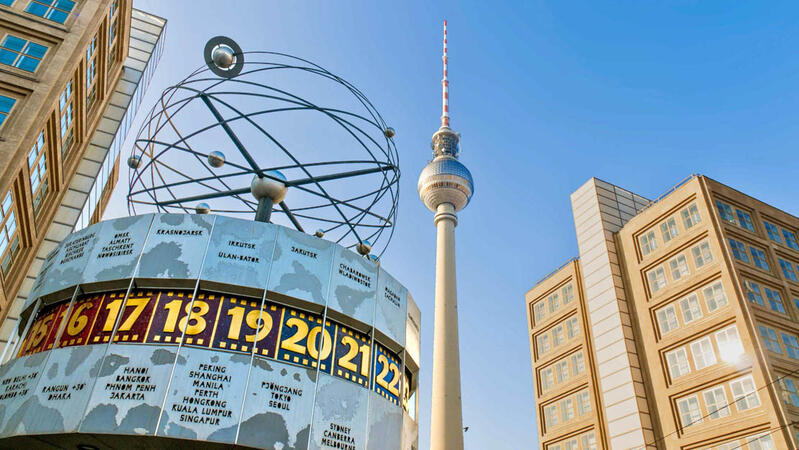
NobleProg delivers high-quality Industrial Automation training courses in Berlin, the dynamic heart of Germany's tech and innovation sector. Participants benefit from expert-led instruction tailored to the professional needs of the capital's diverse industry landscape. Join our Berlin-based programs to enhance your skills with hands-on learning experiences in a world-class urban environment.
Delivered either online or on-site, these instructor-led Industrial Automation live training courses utilize interactive discussion and hands-on practice to demonstrate the programming of control systems, such as computers or robots.
Industrial Automation training is offered as "online live training" or "onsite live training". Online live training (also known as "remote live training") is conducted via an interactive remote desktop. Onsite live training can be performed locally at customer premises in Berlin or within NobleProg corporate training centers located in Berlin.
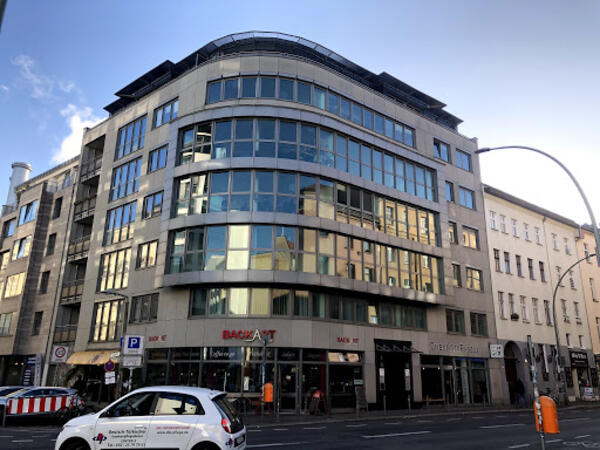
Our training facilities are located at Brückenstr. 4 in Berlin. Located on the fourth floor of a well-kept office building, our premises offer enough space for successful training courses in the heart of Berlin, within walking distance of the Jannowitzbrücke station.
Directions
The NobleProg training facilities are located in the heart of Berlin's Mitte district, just one underground station from Alexanderplatz, one of the centres of this vibrant city. By public transport you can reach us either by underground line U8 to Jannowitzbrücke station, followed by about 100 meters on foot.
Parking
Cars can be parked in the area along Brückenstr. and the nearby side streets, even if you may have to search for a moment. There is no charge for parking.
Local Amenities
Around the Rosenthaler Platz there are numerous small restaurants and shops where you can eat well and cheaply. There are also some hotels close by if you need accommodation for the training.
Our training facilities are located at Dianastrasse 46 in Potsdam-Babelsberg.
Our spacious training rooms are located directly opposite the Filmstudios Babelsberg and offer optimal training conditions for your needs.
Arrival
The NobleProg training facilities are conveniently located near the Medienstadt Babelsberg railway station,
and the A115 motorway is also easily accessible.
Parking
Parking is available in the surrounding streets around our training rooms.
Local Services
Potsdam offers numerous hotels and restaurants and is easily accessible thanks to its well-developed public transport system.
This hands-on training in Berlin addresses ROS-PLC integration and digital twins within industrial automation. Participants will learn to synchronize robotic systems with PLCs, develop digital replicas for simulation, and optimize production workflows through real-time data exchange and advanced monitoring techniques.
This instructor-led live training in Berlin provides beginner-level decision-makers with a strategic overview of AI in smart factories. Participants will examine core ML principles, critical manufacturing use cases, and practical steps for initiating AI-driven initiatives to enhance industrial operations.
This live, instructor-led training in Berlin, delivered online or onsite, caters to intermediate and advanced-level engineers and technicians seeking to master the programming, operation, and optimization of Fanuc and Epson robotic systems for industrial use.
By the conclusion of the course, participants will be capable of:
Understanding the structural architecture and functional capabilities of Fanuc and Epson robots.
Programming robot movements, logic flows, and sensor connections.
Executing safety standards and diagnosing system issues.
Enhancing robotic workflows to boost productivity and efficiency.
This live instructor-led course in Berlin focuses on RTU configuration, I/O mapping, and SCADA integration. Learners will gain proficiency in communication protocols, logic implementation, and troubleshooting to enhance automation and control efficiency within power system settings.
This instructor-led course on Berlin focuses on integrating Allen Bradley Ethernet-based devices. It covers configuring PLCs, HMIs, and routers for efficient communication, while building practical skills in network topology, data exchange, and troubleshooting within industrial automation frameworks.
This live, instructor-led training, available in Berlin (online or on-site), is tailored for intermediate-level automation engineers and control system designers seeking to implement motion control solutions with Omron PLCs.
Upon completion, participants will be able to:
Comprehend essential motion control concepts and their real-world applications.
Configure motion-related hardware and software using Sysmac Studio.
Program and refine single-axis and multi-axis motion operations.
Execute coordinated motion strategies, encompassing interpolation and synchronization.
This instructor-led, live training in Berlin (online or onsite) is aimed at beginner-level to intermediate-level engineers and technicians who wish to master the fundamentals of AB PLCs and apply them to real-world manufacturing scenarios.
By the end of this training, participants will be able to:
Understand the role and applications of AB PLCs in the manufacturing industry.
Program AB PLCs using RSLogix 5000/Studio 5000.
Troubleshoot common issues and perform maintenance on PLC systems.
Design and implement a PLC-controlled system for a manufacturing process.
Demonstrate proficiency in PLC programming through a practical project.
This instructor-led live training in Berlin (delivered online or on-site) is designed for automation engineers and control system designers looking to configure, program, and commission Omron Sysmac systems. The curriculum covers NJ/NX controllers, EtherCAT networking, G5/1S/1SA servo drives, NA Series HMI, and NX safety hardware.
CANoe is a robust software solution by Vector, facilitating the development, testing, and analysis of in-vehicle networks and ECUs, with a specific focus on those employing the CAN (Controller Area Network) protocol.
This interactive, instructor-led session, accessible online or in person, is designed for automotive engineers and testers with foundational to intermediate skills who intend to use CANoe for the simulation, testing, and analysis of CAN-based communication frameworks.
By the conclusion of this program, participants will possess the ability to:
Set up and configure CANoe and its integrated modules
Comprehend core CAN protocol concepts and message framing
Construct simulations for ECUs and CAN networks via CAPL scripting
Effectively oversee, inspect, and resolve issues within CAN traffic
This instructor-led, live training in Berlin (online or onsite) is designed for beginner, intermediate, and advanced-level engineers and technicians aiming to utilize XGT Series PLCs for hardware configuration, module management, and maintaining stable PLC systems.
Upon completion, participants will be able to: identify XGT hardware components, configure PLC system modules, execute backup and diagnostic tasks, and resolve common hardware issues.
This live, instructor-led training in Berlin (delivered online or onsite) is designed for PLC professionals seeking to utilize XG5000 for the full lifecycle management of PLC programs, including creation, testing, deployment, monitoring, and troubleshooting.
By the end of this session, participants will be capable of managing projects, configuring hardware and communications, developing ladder logic, and diagnosing PLC issues effectively.
Develop a solid foundation in OMRON PLC programming at Berlin, mastering Ladder Diagram logic, hardware configuration, and industrial automation workflows. This course is perfectly suited for engineers and technical specialists looking to acquire practical skills in CX-ONE, memory management, and pneumatic control systems to address real-world engineering challenges.
This live, instructor-led course in Luxembourg is designed for beginner to intermediate-level engineers, technicians, and automation professionals who aim to use Python to resolve technical issues, automate routine tasks, and manage industrial data.
Upon completion of this training, participants will be able to:
Develop clear, structured Python scripts for technical use cases
Apply programming logic to engineering-focused problems
Process data from CSV, logs, and text files using Python
Automate repetitive workflows in engineering and automation
This live, instructor-led training in Berlin covers Siemens S7-1500 PLC programming, TIA Portal, HMI, and variable frequency drive diagnostics. It empowers maintenance and automation staff to independently troubleshoot faults in automated production and packaging equipment.
Online Industrial Automation training in Berlin, Industrial Automation training courses in Berlin, Weekend Industrial Automation courses in Berlin, Evening Industrial Automation training in Berlin, Industrial Automation instructor-led in Berlin, Industrial Automation trainer in Berlin, Industrial Automation coaching in Berlin, Industrial Automation boot camp in Berlin, Industrial Automation private courses in Berlin, Weekend Industrial Automation training in Berlin, Industrial Automation on-site in Berlin, Evening Industrial Automation courses in Berlin, Industrial Automation instructor-led in Berlin, Industrial Automation classes in Berlin, Industrial Automation instructor in Berlin, Industrial Automation one on one training in Berlin, Online Industrial Automation training in Berlin